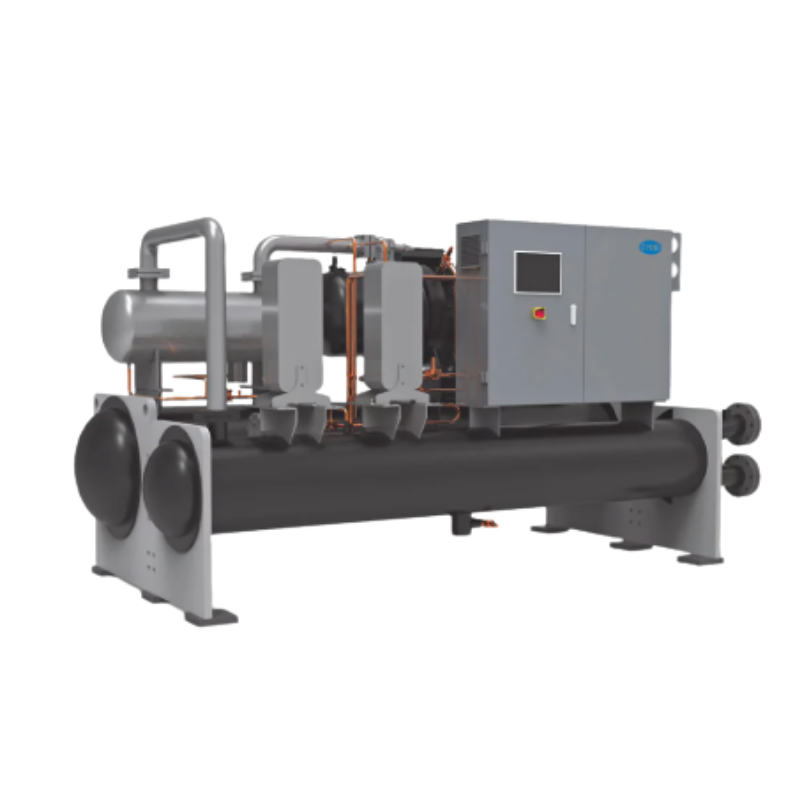
Ultra-high-temperature heat pump
Product Introduction:
The ultra-high-temperature heat pump is an efficient and energy-saving heating device that operates based on the steam compression cycle principle. It uses a small amount of electricity to drive the compressor, converting low-grade thermal energy such as air, water, and industrial waste heat into high-grade thermal energy, and can stably output hot water ranging from 65°C to 145°C. Unlike traditional heat pumps (with outlet water temperature ≤ 65°C), it adopts innovative technologies such as double-stage compression, jet boost heating (EVI), and cascade variable frequency, overcoming the industry pain points of low-temperature environment heating attenuation and low efficiency at high temperatures. It is the optimal alternative to traditional electric boilers, gas boilers, and coal-fired boilers, and perfectly meets the energy-saving and carbon reduction requirements of global markets such as Southeast Asia, the Middle East, and Europe.
Characteristics:
• Ultra-high energy efficiency (COP): The core energy efficiency ratio (COP) remains stable at 2.69 - 2.7, which is over 60% more energy-efficient than traditional electric boilers and reduces operating costs by 40% - 50% compared to gas boilers. It brings significant long-term economic benefits to mechanical and electrical contractors and end customers (hotels, office buildings, manufacturing factories), effectively offsetting the risks of rising energy prices in Southeast Asia and the Middle East.
• High-temperature output core technology: Utilizing a dual-stage coupled cycle and jet boost heating Quasi-two-stage Compression Technology , it breaks through the traditional thermal pump temperature limit and achieves stable output of 65℃ - 145℃ hot water, fully meeting the high-end process requirements of manufacturing factories. It is equipped with a remote monitoring and fault warning module, which can monitor real-time operation data, and provides a 48-hour rapid after-sales response to ensure the stable operation of the project and reduce the customer's operation and maintenance costs.
• Super environmentally friendly and in line with ESG standards: Achieve zero carbon emissions throughout the entire process, perfectly aligning with the global enterprise ESG (environment, society, governance) system and sustainable development requirements. Utilize environmentally friendly refrigerants that do not damage the ozone layer, fully meeting international environmental protection standards, helping customers in Europe, the Middle East, and Southeast Asia avoid carbon tax risks and successfully obtain ESG certification.
Application scenario:
• Textile dyeing and printing industry: Provides 85-95℃ hot water for fabric dyeing, washing, drying, and setting, meeting the constant-temperature heating requirements of dyeing processes. It is particularly suitable for the Dong textile industrial cluster, helping enterprises achieve energy conservation and carbon reduction while ensuring product quality.
• Food processing industry: Provides hot water above 90℃, which is used for steaming meat products, processing soy products, sterilizing beverages, preheating baking, and cleaning and disinfecting in slaughterhouses.
• Electroplating/Electrophoretic Industry: Provides 80-90℃ constant temperature water supply, which is used for heating the electroplating bath liquid and drying in electrophoretic coating, achieving precise temperature control, improving electroplating quality, and being compatible with electronic manufacturing plants. This helps enterprises achieve green production.
• Central heating: Suitable for residential communities, office buildings, industrial parks, schools, hospitals and other buildings in cold regions (such as Europe and northern parts of Southeast Asia) with high demand for heating by warm air pipes. Unlike traditional heat pumps which cannot meet this demand (traditional underfloor heating requires 40-50℃, while radiator heating requires 70-85℃), our ultra-high temperature heat pump can perfectly adapt to this situation, providing comfortable heating while achieving energy savings.
• Chemical processing industry: It can be used for freezing prevention and heating in mines, heating of crude oil in oil fields, and heating of oil pipelines. It is particularly suitable for petrochemical enterprises in the Middle East and Southeast Asia, ensuring safe and stable production.
• Hydromassage therapy industry: Provides high-temperature hot water for steam rooms, foot baths, and wellness centers. Widely used in hotels, resorts, and fitness clubs in Southeast Asia and the Middle East, it meets the high-quality hot water demands of commercial terminals.
Our advantages:
• Technology: In collaboration with the Guangzhou Energy Research Institute, we have pioneered a cold and hot water integrated system that simultaneously supplies 4–20℃ cold water and 50–95℃ hot water, achieving energy cascade utilization.
• Customization: The company has established a "research and development - design - production - installation - after-sales" full-chain closed-loop delivery system. It can precisely match the differentiated process requirements of customers (such as temperature, working conditions, capacity customization), providing one-stop services from scheme design, product implementation to operation support, and enabling the entire project to be advanced and operate stably for a long term throughout the process.
• Case endorsement: It has been implemented with global leaders such as Budweiser, Coca-Cola, China National Petroleum Corporation, China Gas, and Vita Milk, covering all scenarios in the food and beverage, petrochemical, and energy sectors. Each project achieves a reduction of over 25% in carbon emissions annually, and the operation is stable.
• Brand Quality Assurance: We have a comprehensive and authoritative certification system. We receive domestic national standards quality endorsements, as well as top-level international certifications such as EU CE/A++, Halal, and German BAFA. We possess global compliance capabilities, covering the entry requirements of major global markets and enjoying European policy subsidies.